A Message from the Network for Endangered Sea Turtles
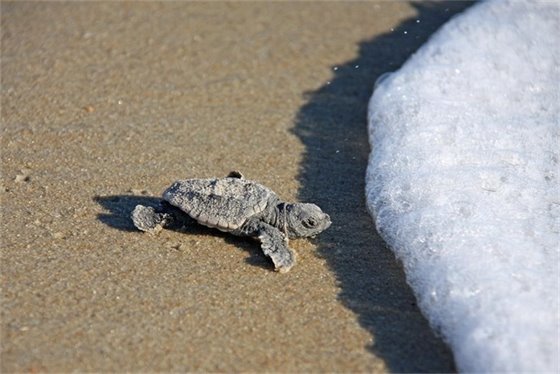
From May through October, sea turtles share our beaches. During those months, mother sea turtles come up on the beach to lay eggs in the sand and about 60 days later hatchlings emerge from the nest. Adult nesting and hatchling emergence usually take place at night.
One of sea turtles’ main cues to navigate while on the beach is the dune creating dark silhouettes against the night sky and the relatively brighter ocean which reflects celestial light. The contrast between the darker dune and the brighter ocean is the main way sea turtles tell the difference between land and water. Once in the ocean they navigate using earth’s magnetic field and sea wave action.
In the modern world, the trek to and from the ocean can be fraught with hazards. White lights shining onto the beach send disorienting cues. Mother sea turtles are put off and may not come onto the beach to lay their eggs. Hatchlings will head toward the brightest light and may end up in parking lots or under beach homes unable to reach the ocean.
To survive, hatchlings must use all of their limited energy to make the long swim to the Gulf Stream. Trash, beach equipment and large holes in the sand may turn a successful instinctive journey into a life threatening one.
We ask all beach goers to take your trash with you, fill holes and don’t leave equipment on the beach overnight. Sparingly use red or amber flash lights when taking night time beach walks. If you see a nesting turtle on the beach, please be still, observe quietly from a distance, and avoid using lights of any kind until she is back in the ocean.
For businesses, municipal facilities and homeowners/renters at the beach front: please follow the rules of sea turtle friendly lighting. Turn lights off whenever possible. Keep indoor lights from shining onto the beach. Otherwise, keep outdoor lights low, keep them shielded and keep light wavelengths long (i.e. red or amber).
If you would like a Network for Endangered Sea Turtles volunteer to do an assessment of the lighting at your beach front property in Nags Head, please contact us at lighting@nestobx.org to make a request.
This conservation work for protected sea turtles in the northern Outer Banks is authorized by the NC Wildlife Resources Commission (ES Permit 25ST10).



 Share on Facebook
 Share on Twitter
 Share via Email
